Kashima Antlers vs Jeonbuk: Match Preview, Predictions and Betting Tips
Published on Monday, 23 November 2026 by Steve


Kashima Antlers vs Jeonbuk Hyundai Motors
AFC Champions League Elite Prediction & Betting Tips
Match Overview

Jeonbuk Hyundai Motors FC vs Kashiwa Reysol - live score, predicted lineups and H2H stats
Kashima Antlers host Jeonbuk Hyundai Motors in an intriguing AFC Champions League Elite league-phase encounter on Wednesday, 25 November 2026. The fixture brings together two of Asia’s most successful clubs at Mercari Stadium, with defending champions Kashima aiming to consolidate their position near the top of the East Region table. Jeonbuk arrive in Japan as one of the Korean peninsula’s traditional powers, but their continental campaign has been less convincing than their domestic performances, leaving them with work to do if they are to move comfortably into the qualification places. You can explore more fixtures from the competition through our AFC Champions League predictions coverage.
The match is scheduled for 19:00 local time, which is 10:00 UTC and 11:00 Central European Time. Matchday five is an important point in the 2026/27 league phase because teams only have a limited number of fixtures remaining in which to establish their knockout-round position. Kashima currently sit second in the East Region, while Jeonbuk are eighth, although only a relatively small points gap separates the middle section of the table. That means Jeonbuk can still transform their continental season with a positive result in Japan, but they will need to cope with the atmosphere, tactical discipline and attacking movement of a Kashima side that has made Mercari Stadium a difficult venue for visitors. Readers looking for additional wagering context can also visit our football betting tips section.
Kashima’s recent performances have combined controlled defensive spells with explosive attacking periods. They followed a 3–0 home victory over Pohang Steelers in continental competition with a goalless draw away to Buriram United, before recording a 4–1 J1 League win against Cerezo Osaka. Their subsequent league results—a 2–0 defeat at FC Tokyo and a 1–1 draw with Shimizu S-Pulse—were less emphatic, but they still underline the difficulty of sustaining peak performance across domestic and continental schedules. Jeonbuk, meanwhile, produced an important 2–0 AFC Champions League Elite victory over Johor Darul Ta’zim at the start of November, following a 2–2 draw with Beijing Guoan. Their league form has included a 3–2 win over Jeju SK and a 1–1 draw away to FC Anyang, demonstrating that they retain significant attacking quality despite occasional defensive fragility. Our prediction is a decisive 3–0 Kashima victory, reflecting their home strength, superior balance in the 2026/27 squad and Jeonbuk’s likely difficulties after their domestic campaign and journey to Japan.
Tactical Preview
Kashima remain perfect in Asian Champions League after late flurry against Pohang | Flashscore.com
Formation & Key Matchups
Kashima Antlers 4-2-3-1
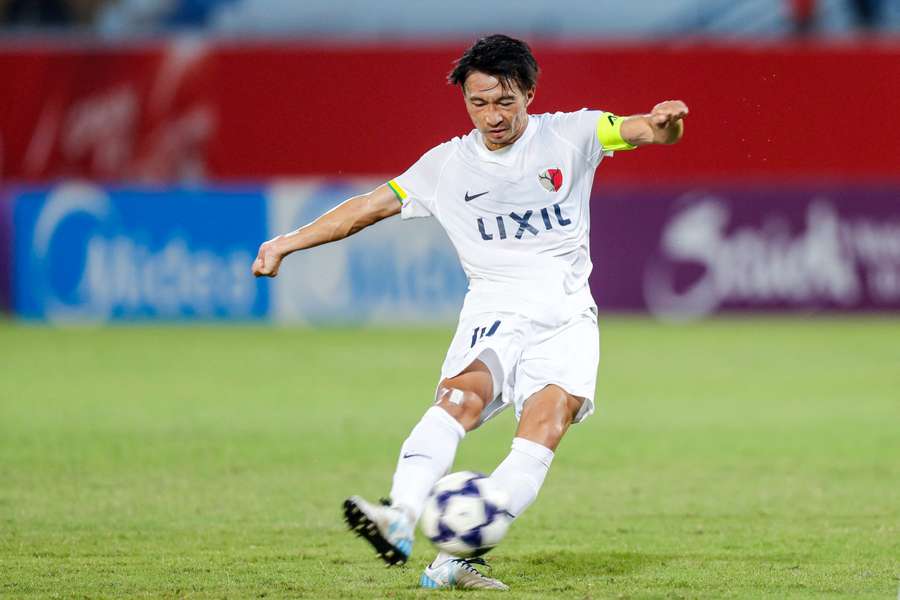
Toru Oniki has restored Kashima’s identity as a disciplined, vertically aggressive team. The 4-2-3-1 shape allows Gaku Shibasaki to operate as the connecting midfielder between a compact double pivot and the attacking line. Kento Misao provides positional protection in front of the centre-backs, while Matheus Bueno offers stronger forward passing and ball-carrying than a purely destructive midfielder. Behind them, Koki Anzai and Ryoya Ogawa can advance from the full-back positions, although Oniki is likely to be selective about how far both defenders commit forward against Jeonbuk’s quick wide players.
The attacking structure should place considerable responsibility on Léo Ceará, whose intelligent movement between centre-backs and ability to attack the near post make him particularly effective in home matches. Yan Matheus and Kyosuke Tagawa can play on opposite sides of Shibasaki, giving Kashima the flexibility to shift into a 4-4-2 without possession or a 4-2-4 when chasing a goal. One of the key tactical battles will occur between Kashima’s left-sided combinations and Jeonbuk right-back Kim Tae-hwan. If Kashima can isolate Kim with quick combinations from Ogawa, Tagawa and the advancing Shibasaki, they should create repeated opportunities to deliver low crosses into Ceará’s movement zone.
Jeonbuk Hyundai Motors 4-2-3-1
Jeonbuk are also expected to adopt a 4-2-3-1, although their structure may become narrower without possession. João Gamboa and Kim Jin-gyu provide the central platform, allowing Lee Yeong-jae to move between midfield and the forward line. Lee Yeong-jae has been one of Jeonbuk’s most productive creative players in the 2026 campaign, while Lee Seung-woo and Lee Dong-jun offer direct running and the ability to attack open spaces behind full-backs. Tiago Orobó is the most likely central striker, with Bruno Mota and Italo available as alternative or supplementary attacking options depending on how head coach Chung Jung-yong manages the squad following Jeonbuk’s domestic schedule.
The Korean side’s greatest threat will come when they force turnovers in midfield and release their wide players before Kashima can reorganise. Lee Dong-jun’s movement against Ryoya Ogawa is important, while Lee Seung-woo drifting inside could create overloads around Misao. However, Jeonbuk’s central defenders will face a demanding examination against Ceará’s rotations, Yan’s acceleration and Shibasaki’s timing. Park Ji-soo’s positioning and Song Bum-keun’s command of the penalty area could therefore prove as important as anything Jeonbuk do in possession. For a broader explanation of how formations and matchup profiles influence our selections, see our match-analysis approach.
Critical Vulnerability
Jeonbuk’s critical vulnerability is the space that can appear behind their advanced full-backs and on the outside of their central-midfield pair. When Gamboa and Kim Jin-gyu step forward to press, the distance between midfield and defence can stretch quickly. Kashima are well suited to exploit that issue because Shibasaki can receive in the half-space, Ceará can pin both centre-backs and Yan Matheus can make diagonal runs beyond the defensive line. If Jeonbuk commit numbers forward in pursuit of an equaliser, the 4-2-3-1 could become a 4-1-4-1 and leave the visitors exposed to rapid second-phase attacks. Kashima’s own potential weakness is the absence of Yuta Higuchi and Kim Tae-hyeon through serious injuries, which reduces midfield and defensive depth, but their projected starting unit remains stronger in the areas most likely to decide the match.
Team News & Squad Status
Kashima Antlers 🟡🔴🟡🟢🟢
- Kashima’s official 2026/27 leadership group is captained by Gaku Shibasaki, with Ikuma Sekigawa, Léo Ceará, Yuma Suzuki and Naomichi Ueda serving as vice-captains.
- Midfielder Yuta Higuchi is unavailable after suffering a fractured right fibula during the 7 November league fixture against FC Tokyo. His absence limits Kashima’s rotational options in central midfield.
- Defender Kim Tae-hyeon is also out after being diagnosed with a fracture of the proximal right tibia sustained during the October match against Kashiwa Reysol.
- Léo Ceará, the 2025 J1 League top scorer, is expected to lead the line, with Yuma Suzuki, Kyosuke Tagawa, Yan Matheus, Élber and Aleksandar Čavrić offering alternative attacking routes.
- Tomoki Hayakawa is the expected first-choice goalkeeper, protected by a likely back four of Koki Anzai, Ikuma Sekigawa, Kaito Chida and Ryoya Ogawa.
- Manager Toru Oniki can use Matheus Bueno and Kento Misao as a double pivot, preserving Gaku Shibasaki for a more advanced creative role.
Jeonbuk Hyundai Motors 🟢🟡🟡🟢🔴
- Jeonbuk have reported no confirmed fresh injury absence during the immediate pre-match period, giving head coach Chung Jung-yong a relatively full senior group from which to choose.
- The visitors completed their domestic campaign schedule with the 21 November home fixture against FC Seoul before travelling to Japan, creating potential fatigue and rotation considerations.
- Song Bum-keun is expected to start in goal, with Park Ji-soo anchoring the central defence and captain Kim Tae-hwan selected at right-back if fully fit to manage a demanding workload.
- Tiago Orobó, Jeonbuk’s leading league scorer in 2026, should start centrally, while Bruno Mota, Italo and Andrea Compagno provide alternative forward options.
- Lee Seung-woo and Lee Dong-jun are key to Jeonbuk’s transition game, with Lee Yeong-jae responsible for creating chances from the number-10 position.
- João Gamboa and Kim Jin-gyu are likely to form the central midfield partnership, although Kang Sang-yoon or Maeng Seong-ung could be introduced if a more mobile midfield unit is required.
Predicted Lineups

It gets worse: United's nightmare ACL draw - News | InDaily, Inside South Australia
| Kashima Antlers 4-2-3-1 | Jeonbuk Hyundai Motors 4-2-3-1 |
|---|---|
| GK: Tomoki Hayakawa | GK: Song Bum-keun |
| RB: Koki Anzai | RB: Kim Tae-hwan |
| CB: Ikuma Sekigawa | CB: Park Ji-soo |
| CB: Kaito Chida | CB: Kim Young-bin |
| LB: Ryoya Ogawa | LB: Kim Tae-hyun |
| DM: Kento Misao | DM: João Gamboa |
| CM: Matheus Bueno | CM: Kim Jin-gyu |
| RW: Yan Matheus | RW: Lee Dong-jun |
| AM: Gaku Shibasaki | AM: Lee Yeong-jae |
| LW: Kyosuke Tagawa | LW: Lee Seung-woo |
| ST: Léo Ceará | ST: Tiago Orobó |
Head-to-Head Record
Leo Ceara nets brace as Kashima Antlers seal J-League title win | Flashscore.com
The clubs have met twice in competitive AFC Champions League action, with both matches taking place during the 2010 edition of the tournament. Kashima won each of those encounters 2–1, first away in Jeonju on 9 March and then at home on 28 April. That gives the Japanese club a perfect historical record in the fixture, with an aggregate score of 4–2 across the two meetings. Although the current squads, coaching staffs and competition format are very different from those matches, the record still provides a useful psychological reference for Kashima, who have repeatedly performed well in high-level East Asian fixtures. Additional historical previews and matchup breakdowns are available through our football prediction archive.
Both of the previous meetings produced three total goals and both teams found the net, suggesting that this rivalry has historically generated open, competitive football. However, our 2026 prediction differs from that pattern because of the current tactical profiles and squad conditions. Kashima’s home structure is stronger defensively than it was earlier in the season, while Jeonbuk may not be able to bring their full domestic intensity to Japan after completing a demanding K League schedule. The visitors certainly possess enough individual quality to score, particularly through Tiago Orobó, Lee Seung-woo and Lee Dong-jun, but Kashima’s central coverage and ability to control the second ball should restrict the number of clean opportunities they create. The most likely version of this match is therefore one in which Kashima dominate territory, Jeonbuk remain dangerous for short periods and the home side eventually pull clear rather than needing to chase the game.
Key Players Comparison
Léo Ceará — Kashima Antlers
Role: Central striker
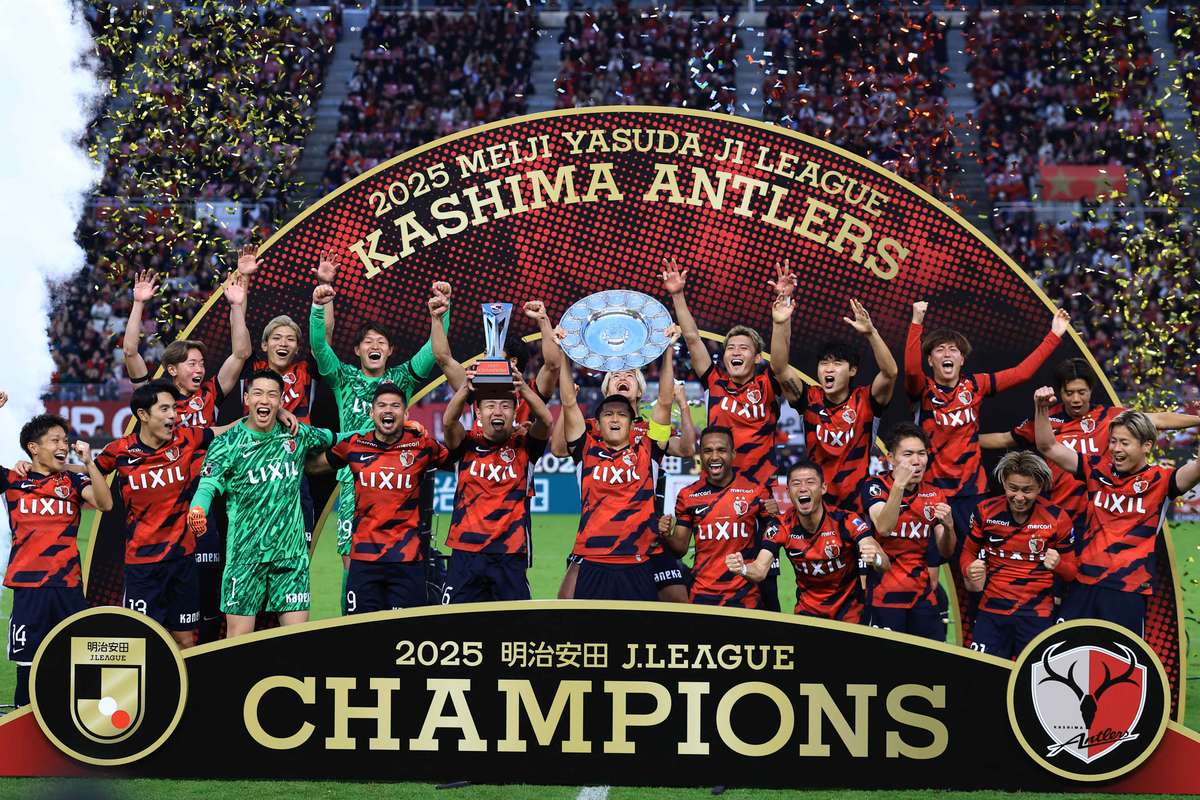
Ceará remains Kashima’s most important focal point. His 2025 J1 Golden Boot-winning campaign demonstrated his consistency around the penalty area, but his contribution extends beyond goals. He attacks crosses with conviction, draws defenders away from Shibasaki and creates space for runners from wide positions. Against a Jeonbuk defence that can become stretched in transition, his movement between the centre-backs should generate the first decisive opening.
Tiago Orobó — Jeonbuk Hyundai Motors
Role: Central striker
Orobó has been Jeonbuk’s most reliable league scorer in 2026 and provides a physical reference point when the Korean side move forward. He is capable of holding off centre-backs, attacking cutbacks and converting limited opportunities. Jeonbuk’s problem may be service rather than finishing: if Gamboa and Kim Jin-gyu cannot advance the ball beyond Kashima’s first pressing line, Orobó could become isolated for long stretches.
Gaku Shibasaki — Kashima Antlers
Role: Attacking midfielder and captain
Shibasaki’s calm positioning gives Kashima a major structural advantage. He can drop into midfield to create a passing angle, arrive beyond Ceará or switch play quickly when Jeonbuk’s defensive line shifts. The captain’s set-piece delivery may also be important against a tall Korean back line. His experience in continental competition is particularly valuable in the closing stages, when Kashima may need to manage possession and protect a lead.
Lee Yeong-jae — Jeonbuk Hyundai Motors
Role: Creative midfielder
Lee Yeong-jae has been one of Jeonbuk’s leading assist providers and is the player most capable of finding space between Kashima’s midfield and defence. If he receives on the half-turn, Jeonbuk can attack quickly through Orobó and the wide forwards. If Misao and Bueno prevent those receptions, Jeonbuk may be forced into slower wide attacks that play into Kashima’s defensive organisation.
The individual comparison is close in attacking areas, but Kashima hold an edge in overall cohesion. Ceará and Shibasaki have a well-established relationship with the players around them, while Oniki’s full-backs understand when to advance and when to protect the back four. Jeonbuk’s wide attackers are dangerous, yet their effectiveness depends on transitions and the ability to progress through midfield under pressure. Kashima should be able to make more consistent use of their key players because their 4-2-3-1 provides clearer routes into the final third. That does not guarantee a clean sheet, but it supports the case for Kashima scoring multiple goals while limiting Jeonbuk’s best chances.
The Managers
Toru Oniki — Kashima Antlers
Oniki has successfully restored Kashima’s standing among Japan’s elite. After guiding the club to the 2025 J1 League championship and continuing their strong form into the 2026 season, he has built a side that combines experienced leaders with players entering their peak years. His tactical work is particularly evident in Kashima’s positional discipline: the team can defend compactly without the ball, then change tempo quickly once possession is recovered. That flexibility is crucial in continental matches, where opponents often attempt to disrupt Japanese teams with aggressive pressing and direct transitions.
For this fixture, Oniki must balance attacking ambition with the need to protect space behind Ogawa and Anzai. He is likely to encourage controlled pressure rather than relentless high pressing, especially given Jeonbuk’s speed on the wings. The availability of Shibasaki as captain gives Oniki an experienced on-field organiser, while the depth among Ceará, Suzuki, Tagawa, Yan, Élber and Čavrić offers multiple ways to change a match from the bench. The Japanese coach’s biggest selection issue is compensating for the absences of Higuchi and Kim without weakening the team’s balance.
Chung Jung-yong — Jeonbuk Hyundai Motors
Chung took charge of Jeonbuk with the task of re-establishing the club as a dominant domestic force and a credible Asian contender. His team has shown strong attacking numbers in the K League, but continental matches have exposed occasional difficulties in maintaining defensive compactness over long periods. Jeonbuk’s ability to win duels and break forward remains impressive, although their performance level can depend heavily on the first pass out of midfield. When that pass is delayed, the forward players can become disconnected from the rest of the side.
The timing of this fixture is not ideal for Chung. Jeonbuk completed their league-finale assignment against FC Seoul on 21 November and then had to prepare for a demanding trip to Kashima. That schedule may influence his decisions about the freshness of Kim Tae-hwan, Lee Seung-woo, Lee Dong-jun and Tiago Orobó. Chung may consider using Bruno Mota or Italo as an additional attacking outlet if Jeonbuk fall behind, but committing too many players forward would increase the risk of Kashima scoring on the counterattack. His challenge is to keep the contest compact during the opening hour and only then increase the attacking risk.
Betting Predictions & Tips
Odds: 1.72
Kashima are the logical match-winner. They are at home, have the stronger current continental position and possess a more cohesive tactical structure. Their 3–0 victory over Pohang demonstrated the attacking level they can reach at Mercari Stadium, while the goalless draw at Buriram showed that they can also control difficult away fixtures. Jeonbuk’s quality prevents this from being a one-sided betting case on paper, but their eighth-place position and demanding recent schedule weaken the argument for an away upset. At European odds of 1.72, Kashima win offers the strongest combination of probability and value. A stake approach of three units is reasonable for single-match bettors who prefer lower volatility. More information about interpreting prices and staking can be found in our betting advice pages.
Odds: 2.60
The 3–0 prediction naturally supports a more aggressive Kashima handicap. The home side’s best route to covering -1.5 is early territorial control: force Jeonbuk’s full-backs into deeper positions, prevent clean midfield exits and convert pressure before the visitors can settle. Jeonbuk have enough attacking talent to make a one-goal home win very possible, so this is not the safest selection, but the 2.60 price compensates for the added risk. Kashima’s ability to score in quick succession at home—most notably in the recent 3–0 win over Pohang and 4–1 defeat of Cerezo—makes the handicap more attractive than a conventional single-goal margin market.
Odds: 1.88
Both teams have enough attacking quality to contribute to a three-goal match, even though our primary prediction gives Kashima a clean sheet. Kashima have scored seven goals across their two most convincing recent home performances, while Jeonbuk have shown they can create against organised defences through Lee Yeong-jae, Lee Seung-woo and Tiago Orobó. The main risk is that Jeonbuk prioritise defensive compactness after travelling and attempt to slow the tempo. However, the game state should eventually favour goals: if Kashima score first, Jeonbuk must open up; if Jeonbuk score first, Kashima have the bench strength to increase their attacking pressure. Over 2.5 therefore remains a viable supporting option.
Odds: 2.35
This selection follows the specific 3–0 prediction and Kashima’s defensive ceiling at home. Tomoki Hayakawa has a settled back four in front of him, while Misao and Bueno should reduce the number of direct passes reaching Orobó. Jeonbuk have not always been clinical when required to attack for extended periods, and their most dangerous moments are likely to arrive in transition rather than through sustained pressure. If Kashima establish a two-goal cushion, Oniki’s side are experienced enough to protect the lead without making reckless defensive substitutions. The 2.35 quote is attractive for bettors who agree that Kashima’s control will be more important than an end-to-end contest.
Odds: 13.00
The correct-score market is always volatile, but 3–0 offers a logical narrative for this fixture. It allows for Jeonbuk to remain competitive during the first half before Kashima’s superior bench, home intensity and tactical control create separation. A possible sequence is a first-half goal from Ceará, followed by a second after the interval as Jeonbuk commit more players forward, and a late counterattacking goal once the visitors lose structural discipline. This should be treated as a speculative small-stake selection rather than a primary wager. Readers should also review the site’s betting disclaimer before placing any wager.
📊 Final Score Prediction
Match Analysis
Kashima are predicted to win 3–0 because they have the clearest tactical route to controlling the match from the opening whistle. Their midfield can protect the centre, Shibasaki can dictate the tempo and Ceará can occupy Jeonbuk’s central defenders without requiring constant touches. The first goal is likely to be important. If Kashima score before half-time, Jeonbuk will be forced to push their wide players higher, opening more space for Yan Matheus and Tagawa to attack. The projected 4-2-3-1 gives Kashima enough protection against the counterattack to maintain pressure without becoming reckless.
The clean-sheet element is ambitious but justified by Jeonbuk’s likely service problem. Orobó needs deliveries from Lee Yeong-jae and the wide forwards, yet Misao and Bueno are well positioned to block those passing lanes. Song Bum-keun may keep the score respectable for long periods, but repeated Kashima pressure should eventually lead to a second goal. A third could arrive after 75 minutes, either from a set piece, a low cross toward Ceará or a transition into space created by Jeonbuk’s substitutions. A 3–0 outcome combines Kashima’s home advantage, defensive structure and stronger attacking depth, making it our final prediction.
Key Insights & Statistics
- Kashima have won both previous competitive meetings with Jeonbuk, recording 2–1 victories home and away during the 2010 AFC Champions League.
- The two historical fixtures produced an aggregate score of 4–2, with both teams scoring in each match.
- Kashima head into matchday five second in the AFC Champions League Elite East Region, while Jeonbuk are eighth.
- Kashima’s latest continental results include a 3–0 victory over Pohang Steelers and a 0–0 draw away to Buriram United.
- Jeonbuk defeated Johor Darul Ta’zim 2–0 at the start of November after drawing 2–2 with Beijing Guoan in their previous Asian fixture.
- Léo Ceará finished the 2025 J1 League season as top scorer with 21 goals and remains Kashima’s central attacking reference.
- Tiago Orobó leads Jeonbuk’s league scoring with 11 goals, while Lee Seung-woo has contributed eight and Bruno Mota four.
- Lee Yeong-jae has been Jeonbuk’s most productive creator in the 2026 league campaign, recording seven assists.
- Kashima will be without Yuta Higuchi because of a fractured right fibula and Kim Tae-hyeon because of a proximal right-tibia fracture.
- Jeonbuk have no newly confirmed absentee, although their domestic finale on 21 November and subsequent travel to Japan create potential fatigue and rotation issues.
- Kashima’s predicted 4-2-3-1 features Gaku Shibasaki as captain and advanced playmaker behind Léo Ceará.
- Jeonbuk’s most dangerous transition players are Lee Dong-jun and Lee Seung-woo, but both require quick service through midfield.
- Kashima’s strongest betting angle is the home victory, with the -1.5 handicap and win-to-nil markets offering higher-value alternatives.
- The 3–0 prediction is supported by Kashima’s combination of home form, tactical cohesion, attacking depth and Jeonbuk’s congested schedule.
Conclusion
Kashima Antlers versus Jeonbuk Hyundai Motors is a meeting between two prestigious Asian clubs at very different points in their current continental campaigns. Kashima have the home advantage, the stronger league-phase position and a tactical system that is well suited to controlling possession while remaining dangerous in transition. Their 2026/27 squad combines the experience of Shibasaki, Misao and Ceará with the pace of Yan Matheus and Tagawa, giving Oniki several ways to attack Jeonbuk’s defensive structure.
Jeonbuk cannot be dismissed because they have genuine quality in Orobó, Lee Seung-woo, Lee Dong-jun and Lee Yeong-jae. If they win the midfield battle and force Kashima’s full-backs into retreat, the visitors have the individual ability to create an upset. The concern is that their route to goal depends heavily on transition moments, while Kashima are disciplined enough to limit those opportunities and technically secure enough to sustain pressure at the other end. The recent domestic schedule and travel requirements add another layer of difficulty for Chung’s team.
Our final prediction is a 3–0 Kashima Antlers victory. The safest recommended selection is the home win at indicative European odds of 1.72, with the -1.5 Asian handicap, over 2.5 goals, win to nil and correct score 3–0 offering progressively more speculative alternatives. The projected score reflects Kashima’s home superiority and Jeonbuk’s potential fatigue, but it should not obscure the quality of the Korean side. For more upcoming match previews, betting angles and tournament coverage, return to our latest football predictions.


