Belarus vs Burkina Faso: Match Preview, Predictions and Betting Tips
Published on Sunday, 07 June 2026 by Steve


Belarus vs Burkina Faso - International Friendly
Friendly International Prediction & Betting Tips
Match Overview

Main man: Fedor Lapoukhov Rated by Transfermarkt as Belarus' joint-most valuable player at €1m, the Dinamo Minsk goalkeeper started every match in his country's 2024/25 Nations League campaign. Lapoukhov is likely to
The Belarus national football team, known as the White Wings, prepares to host the Stallions of Burkina Faso in what promises to be an intriguing international friendly encounter at the Dinamo Stadium in Minsk on June 9, 2026. This fixture represents a significant moment for both nations as they look to build momentum ahead of crucial upcoming qualification campaigns. For Belarus, this match comes under the stewardship of newly appointed head coach Viktor Goncharenko, who took over the reins in January 2026 following the departure of Carlos Alos. The Belarusian Football Federation made the change after a disappointing 2026 FIFA World Cup qualifying campaign that saw the White Wings finish bottom of Group C with just two points from six matches, despite some spirited performances in their final fixtures including a memorable 2-2 draw away to Denmark in Copenhagen. The federation has placed its faith in Goncharenko, a man who knows Belarusian football intimately from his six championship-winning seasons with BATE Borisov between 2007 and 2013, to rebuild the national team and restore pride to the red and green jersey.
For Burkina Faso, this Eastern European tour forms part of a broader strategy under new coach Amir Abdou, who was appointed in March 2026 following the team's elimination from the 2025 Africa Cup of Nations. The Franco-Comorian tactician has been tasked with preparing the Stallions for the 2027 Africa Cup of Nations qualifiers, which will be hosted across Kenya, Tanzania, and Uganda. This friendly in Minsk follows just four days after Burkina Faso's historic first-ever meeting with Russia in Volgograd, making this a demanding double-header for the West African side. The Burkina Faso Football Federation has been proactive in expanding their scouting network across Europe, with Abdou recently convincing dual-nationality players such as Arthur Zagre of Excelsior Rotterdam and Rachid Kouda of Mantova to commit their international futures to the Stallions. This match provides an excellent opportunity for both teams to experiment with tactics, blood new players, and build team chemistry in a competitive but low-stakes environment.
The historical context of this fixture is fascinating as it represents the very first meeting between these two nations at senior international level. Belarus, competing in the European confederation UEFA, rarely faces African opposition, while Burkina Faso's travels to Eastern Europe are equally uncommon. The contrast in styles should make for compelling viewing - Belarus typically employing organized, disciplined defensive structures under their new coach, while Burkina Faso brings the technical flair and physical athleticism that characterizes many West African sides. With both teams in transitional phases under new management, this friendly takes on added significance as a benchmark for progress. The match prediction models suggest a tightly contested affair, with both teams likely to prioritize defensive solidity over attacking ambition given the experimental nature of their squads and the fact that this is the second of two demanding away fixtures for the visitors in the space of five days.
Tactical Preview

Belaruss Max Ebong C Action Against Editorial Stock Photo - Stock Image | Shutterstock Editorial
Formation & Key Matchups
Belarus 5-3-2
Under Viktor Goncharenko, Belarus has transitioned to a more conservative 5-3-2 formation that prioritizes defensive organization and compactness. This tactical shift represents a departure from the more open approach seen during the latter stages of Carlos Alos's tenure, which yielded some encouraging results but ultimately proved insufficient in World Cup qualifying. The three central defenders provide a solid foundation, with the wing-backs offering width in attack while dropping back to form a five-man defensive line when out of possession. The midfield trio operates with one dedicated holding player and two more advanced operators who look to transition quickly on the counter-attack. This system has been designed to maximize Belarus's strengths - disciplined positional play, collective defensive effort, and set-piece threat - while minimizing their weaknesses in open play against technically superior opponents. The evolution of football tactics in the modern game has shown that well-organized defensive units can frustrate more talented attacking sides, and Goncharenko will be looking to prove exactly that against Burkina Faso.
Burkina Faso 4-3-3
Amir Abdou has implemented a fluid 4-3-3 system that seeks to balance defensive solidity with attacking creativity. The Stallions' approach is built around a strong core of European-based players, with the defensive unit anchored by the experienced Edmond Tapsoba of Bayer Leverkusen, who provides both technical quality on the ball and commanding aerial presence. The midfield three typically consists of one deep-lying playmaker tasked with dictating tempo and two box-to-box operators who support both defensive transitions and attacking forays. The front three interchanges positions regularly, with wide forwards cutting inside to create space for overlapping full-backs. This system has shown promise in Abdou's early tenure, though the coach has been clear that he is still evaluating his player pool and establishing his preferred tactical identity. The modern metrics of football analysis suggest that Burkina Faso's physical advantages and technical ability in wide areas could pose significant problems for Belarus's defensive block, particularly if the White Wings' wing-backs are caught high up the pitch.
Critical Vulnerability
The most critical vulnerability in this matchup lies in the potential fatigue factor for Burkina Faso. Playing two demanding international fixtures in Eastern Europe within four days - first against Russia in Volgograd on June 5, then traveling to Minsk for this encounter on June 9 - presents significant physical and logistical challenges. The travel between Volgograd and Minsk is substantial, and Abdou may be forced to rotate heavily to manage his squad's freshness. This could disrupt the tactical cohesion he is attempting to build and provide Belarus with an opportunity to exploit a potentially disjointed visiting side. Additionally, both teams are missing key personnel - Burkina Faso will be without captain Bertrand Traore, goalkeeper Herve Koffi, defender Nasser Djiga, and forward Lassina Traore through injury, while Belarus continues to rebuild following the retirement of several long-serving veterans. The offside rule and defensive line discipline will be crucial, as any lapses in concentration could be exploited by either side's counter-attacking threats.
Team News & Squad Status
Belarus 🇧🇾
- Viktor Goncharenko takes charge of his first home friendly since being appointed head coach in January 2026
- Goalkeeper Fedor Lapoukhov has established himself as first choice following impressive performances in World Cup qualifying
- Defender Aleksandr Martynovich provides veteran leadership in the back line with over 50 international caps
- Midfielder Max Ebong, playing his club football in Kazakhstan with FC Astana, remains a key creative outlet
- Young forward Trofim Melnichenko, recently moved to FC Porto B in Portugal, is one to watch for the future
- Several players from the domestic league, including representatives from Dinamo Minsk and BATE Borisov, have been called up to strengthen squad depth
- The team has shown improved defensive organization in training camp under Goncharenko's methods
- Valery Gromyko, who scored in the famous 2-2 draw with Denmark, is expected to feature prominently in midfield
Burkina Faso 🇧🇫
- Coach Amir Abdou faces his second test in charge following his debut against Russia in Volgograd
- Captain Bertrand Traore is unavailable due to injury, leaving a significant leadership void in the squad
- Experienced goalkeeper Herve Koffi is also sidelined, creating an opportunity for Kilian Nikiema or Ladji Sanou
- Defender Nasser Djiga's injury has opened the door for Rachide Gnanou of IF Gnistan to earn his first senior cap
- Edmond Tapsoba of Bayer Leverkusen is expected to captain the side in Traore's absence
- New dual-nationality recruits Arthur Zagre and Rachid Kouda are in contention to make their debuts
- Forward Dango Ouattara of AFC Bournemouth provides Premier League quality in the attacking unit
- Midfielder Blati Toure brings experience from his time with Pyramids FC in Egypt
- The squad is expected to show heavy rotation from the Russia fixture due to the demanding schedule
Predicted Lineups

Tapsoba heads Burkina Faso to dramatic victory at Afcon - Read Qatar Tribune on the go for unrivalled news coverage
| Belarus 5-3-2 | Burkina Faso 4-3-3 |
|---|---|
| F. Lapoukhov (GK) | K. Nikiema (GK) |
| V. Malkevich (RWB) | I. Kaboré (RB) |
| K. Pechenin (CB) | E. Tapsoba (CB) |
| A. Martynovich (CB) | I. Dayo (CB) |
| Z. Volkov (CB) | S. Yago (LB) |
| P. Zabelin (LWB) | B. Toure (CDM) |
| M. Ebong (CM) | S. Aziz Ki (CM) |
| V. Gromyko (CM) | C. Badolo (CM) |
| N. Demchenko (CAM) | D. Ouattara (RW) |
| G. Barkovsky (ST) | M. Konate (ST) |
| T. Melnichenko (ST) | O. Bouda (LW) |
Head-to-Head Record
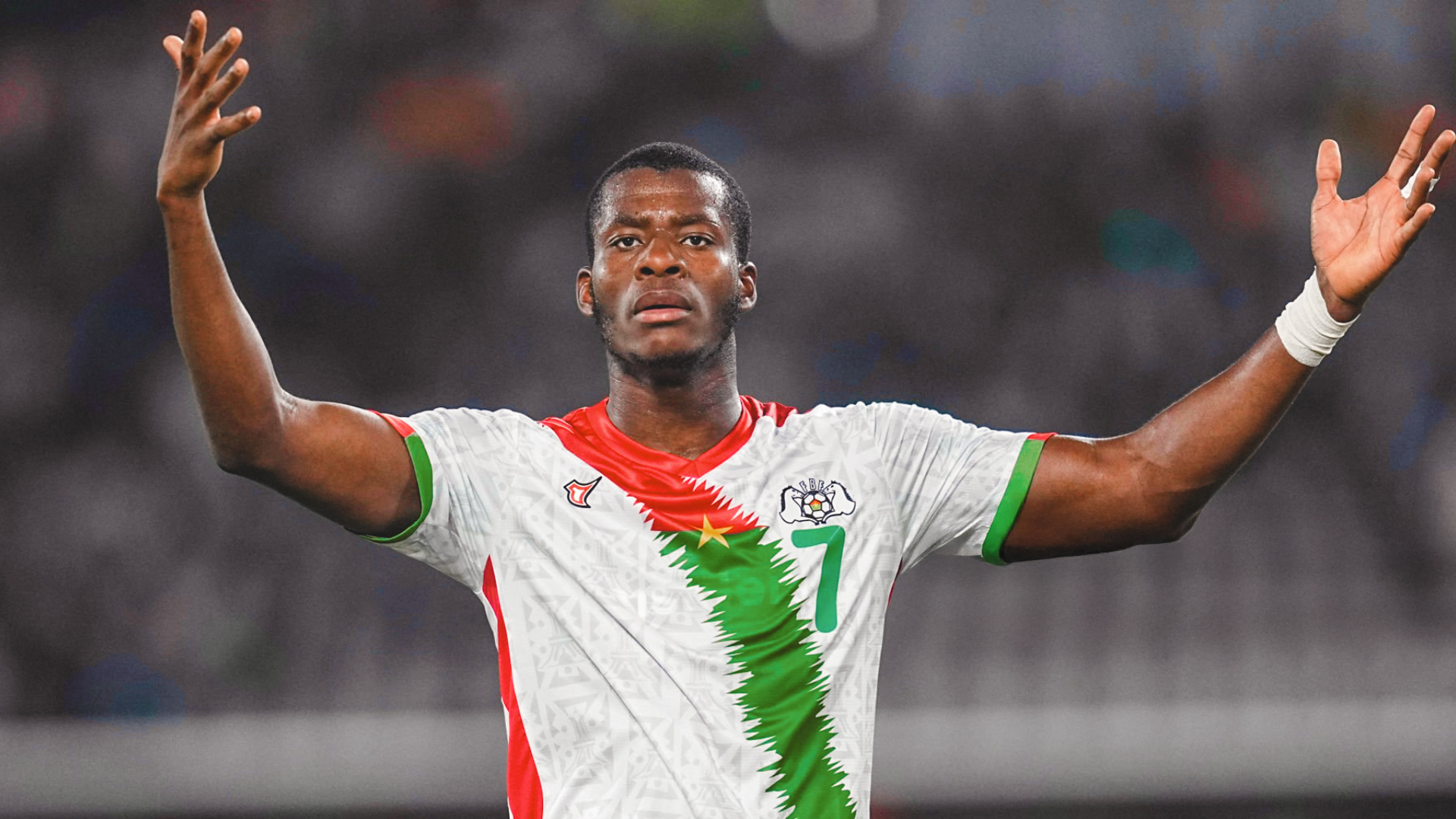
Dango Ouattara and Frank Onyeka's Africa Cup of Nations fixtures | Brentford FC | Brentford FC
This fixture represents the very first meeting between Belarus and Burkina Faso at senior international level, making it a historic occasion for both footballing nations. The lack of previous encounters adds an element of unpredictability to the match, as neither side has established psychological advantages or familiar patterns of play against the other. Belarus, as a member of UEFA, has historically played predominantly against European opposition, with occasional forays against Asian teams in friendly matches. Their experience against African sides is limited, which could present both opportunities and challenges as they adapt to the different tactical approach and physical characteristics that Burkina Faso will bring to the contest. The football match schedule for international friendlies often brings together teams from different confederations precisely to provide these unique testing environments.
While there is no direct head-to-head history to analyze, we can draw some conclusions from both teams' recent form against diverse opposition. Belarus concluded their 2026 World Cup qualifying campaign with a respectable run of results in their final matches, including the 2-2 draw in Denmark and a 0-0 stalemate with Greece in Hungary. These results demonstrated an improved defensive resilience that Viktor Goncharenko will be keen to build upon. Burkina Faso, meanwhile, have shown mixed form in their recent outings. Their 2025 AFCON campaign ended in disappointment with elimination by Côte d'Ivoire in the round of 16, but they have recorded some positive results in World Cup qualifying and friendly matches, including a 3-0 victory over Benin and a 2-1 win against Equatorial Guinea. The Stallions' ability to perform away from home in unfamiliar conditions will be severely tested by the Eastern European environment and the quick turnaround from their match against Russia. For those looking at draw predictions, the historical context of first-time meetings between teams from different confederations often produces cagey, tactical affairs as both managers prioritize learning about their opponents over expansive attacking play.
Key Players Comparison
Edmond Tapsoba (Burkina Faso)
The Bayer Leverkusen center-back is the standout player in this fixture. At 25 years old, Tapsoba has established himself as one of the most composed and technically gifted defenders in the Bundesliga. His ability to play out from the back, combined with his physical dominance in aerial duels, makes him the cornerstone of Burkina Faso's defensive unit. In the absence of captain Bertrand Traore, Tapsoba is expected to assume the armband and lead by example. His matchup against Belarus's forward line will be crucial in determining the outcome of this encounter. The world's best defenders often dictate the tempo of international matches, and Tapsoba has the quality to do exactly that.
Max Ebong (Belarus)
The FC Astana midfielder has become the creative heartbeat of the Belarus national team. Ebong's ability to transition play from defense to attack, combined with his eye for a forward pass, makes him the player most likely to unlock the Burkina Faso defense. His experience playing in the Kazakhstan Premier League has given him exposure to diverse tactical approaches and playing styles, which will be valuable against African opposition. Ebong's set-piece delivery is also a significant weapon for Belarus, and his dead-ball situations could prove decisive in a tight contest. For those exploring both teams to score markets, Ebong's creativity will be essential if Belarus are to find the net.
Dango Ouattara (Burkina Faso)
The AFC Bournemouth winger brings Premier League pace and directness to Burkina Faso's attacking arsenal. Ouattara's ability to run in behind defensive lines and create chances from wide areas makes him a constant threat, particularly against teams that play with a high defensive line. His recent form in English football has seen him develop into a more complete forward, adding end product to his undeniable athletic gifts. Against Belarus's five-man defensive block, Ouattara's movement and willingness to take on defenders could be the key to unlocking a stubborn rearguard. The impact of African footballers in European leagues has been transformative, and Ouattara exemplifies the quality that Burkina Faso can call upon.
Fedor Lapoukhov (Belarus)
The PFC CSKA Sofia goalkeeper has emerged as Belarus's first-choice shot-stopper following a series of impressive performances in World Cup qualifying. Lapoukhov's commanding presence in the penalty area, combined with his excellent reflexes and shot-stopping ability, provides the foundation for Goncharenko's defensive approach. His distribution from the back has improved significantly, allowing Belarus to build attacks from deep rather than resorting to hopeful long balls. In a match where Burkina Faso's attacking players will test him with shots from distance and close-range headers, Lapoukhov's concentration and organizational skills will be vital. The goalkeeper's role in modern football extends far beyond shot-stopping, and Lapoukhov's all-round game will be under scrutiny.
The individual battles across the pitch will be fascinating to observe. In central defense, Edmond Tapsoba's physical and technical superiority gives Burkina Faso a clear advantage, but Belarus's collective defensive organization under Goncharenko could negate this if they maintain their shape and discipline. In midfield, the contest between Max Ebong's creativity and Blati Toure's destructive capabilities will likely determine which team can control the tempo of the game. Out wide, Dango Ouattara's pace against Belarus's wing-backs will be a key matchup, particularly if the White Wings push their wide players forward and leave space in behind. The goalkeeping duel also favors Burkina Faso on paper, but the absence of Herve Koffi means that Kilian Nikiema will need to step up, while Fedor Lapoukhov has shown he can match most goalkeepers in this type of fixture. For correct score betting enthusiasts, these individual matchups suggest a low-scoring affair where defensive quality may outweigh attacking flair.
The Managers
Viktor Goncharenko (Belarus)
Viktor Goncharenko's appointment as Belarus head coach in January 2026 represents a homecoming of sorts for one of the most successful managers in the country's club football history. The 49-year-old tactician made his name with BATE Borisov, winning six Belarusian Premier League titles between 2007 and 2013 and guiding the club to memorable appearances in the UEFA Champions League and Europa League group stages. His subsequent managerial career took him to Russia, where he coached CSKA Moscow, Kuban Krasnodar, FC Krasnodar, Ural Yekaterinburg, Ufa, and Pari Nizhny Novgorod. With CSKA, he twice finished as runner-up in the Russian Premier League, establishing his credentials as a coach capable of working with high expectations and talented squads. Goncharenko's return to the Belarus national team setup is viewed as a long-term project, with the federation hoping he can instill the same winning mentality and tactical intelligence that characterized his BATE teams. His immediate challenge is to rebuild confidence after a disappointing World Cup qualifying campaign and establish a clear identity for the team ahead of the 2026-27 UEFA Nations League campaign. Goncharenko is known for his meticulous preparation and attention to defensive detail, qualities that should serve Belarus well in this friendly encounter.
Goncharenko's tactical philosophy has evolved over the years, but certain principles remain constant. He favors organized, compact defensive structures that make life difficult for opponents, while looking to exploit space on the counter-attack through quick transitions. His BATE teams were renowned for their ability to punch above their weight against superior European opposition, and he will be looking to instill similar resilience in the national team. The coach has already indicated that he views this friendly against Burkina Faso as an important opportunity to test players in competitive conditions and begin implementing his preferred tactical approach. With several experienced players having retired or moved on from the national team, Goncharenko is actively looking to blood new talent and build a squad capable of competing in future qualification campaigns. His man-management skills and ability to develop young players will be crucial assets as he seeks to restore Belarus's standing in European football. For those interested in football betting analysis, Goncharenko's conservative approach suggests Belarus will prioritize defensive solidity over attacking ambition in his early tenure.
Amir Abdou (Burkina Faso)
Amir Abdou's appointment as Burkina Faso head coach in March 2026 marked the beginning of a new era for the Stallions following their disappointing 2025 AFCON campaign. The 53-year-old Franco-Comorian manager brings a wealth of international experience, having previously coached the Comoros national team and Mauritania with considerable success. Abdou is credited with transforming Comoros into a competitive international force, guiding them to unprecedented achievements and earning a reputation as one of the most astute tactical minds in African football. His move to Burkina Faso represents a step up to a nation with greater resources and higher expectations, but also a squad with significant talent competing in top European leagues. Abdou's contract runs through 2028, giving him the time and security to implement his long-term vision for the team. He has been given full autonomy to assemble his technical staff, though the federation has encouraged the inclusion of local coach Oscar Barro as second assistant to facilitate knowledge transfer and maintain connections with the domestic football structure. The tactical approach Abdou has begun implementing emphasizes collective organization, high pressing, and rapid transitions - a style that requires high fitness levels and tactical understanding from his players.
Abdou's early weeks in charge have been characterized by active scouting across Europe and decisive action in securing dual-nationality players for the Stallions. His successful recruitment of Arthur Zagre and Rachid Kouda demonstrates a proactive approach to squad building that Burkina Faso has sometimes lacked in the past. The coach has been clear about his objectives, stating that he is not interested in pleasing people but in building a competitive team capable of qualifying for the 2027 Africa Cup of Nations and the 2030 World Cup. His first match in charge, a friendly against Guinea-Bissau in March 2026, provided early indications of his preferred tactical approach, though the true test of his methods will come in competitive qualification matches. This Eastern European tour against Russia and Belarus represents an important learning experience for Abdou, exposing his squad to different playing styles and conditions ahead of future challenges. The demanding schedule of two matches in five days, combined with significant injury absentees, means that Abdou will need to demonstrate his squad management skills and tactical flexibility. For betting analysis, Abdou's track record suggests he will prioritize organizational discipline and team cohesion over individual flair in his early matches.
Betting Predictions & Tips
Odds: 1.65
This is the standout selection for this fixture. Both teams are in transitional phases under new management, with Belarus prioritizing defensive organization under Viktor Goncharenko and Burkina Faso dealing with significant injury absentees and fixture congestion from their match against Russia just four days prior. The historical pattern of first-time meetings between teams from different confederations typically produces cautious, tactical encounters as managers prioritize learning over expansive play. Belarus's recent form shows a marked improvement in defensive resilience, with clean sheets against Greece and a solid performance in Denmark. Burkina Faso, while possessing attacking quality in players like Dango Ouattara, are likely to field a rotated squad and may lack the cohesion to break down a well-organized five-man defensive block. The over/under prediction models strongly favor a low-scoring affair, and the 1.65 odds available for under 2.5 goals represent excellent value for a match that is likely to be decided by defensive quality rather than attacking brilliance.
Odds: 3.20
The draw offers exceptional value at 3.20 in European odds. International friendlies between teams from different confederations, particularly when both are in rebuilding phases, frequently end in stalemates. Neither team has significant competitive motivation to push for victory at all costs, and both managers are likely to view this primarily as a learning exercise. Burkina Faso's fatigue factor from their Russia fixture and likely squad rotation further increases the probability of a balanced contest. Belarus's home advantage at the Dinamo Stadium is offset by their own experimental approach under a new coach. The draw prediction specialists have identified this as a prime candidate for a stalemate, with both teams potentially satisfied to avoid defeat and take positives from their defensive performances. At odds of 3.20, the draw represents the best value play in the match result market.
Odds: 1.85
The BTTS No market is strongly favored for this encounter. Belarus's tactical approach under Goncharenko prioritizes defensive solidity and clean sheets, as evidenced by their recent 0-0 draw with Greece. The White Wings are likely to set up in a compact 5-3-2 formation that makes it difficult for opponents to create clear chances. Burkina Faso, meanwhile, will be without several key attacking players including Bertrand Traore and Lassina Traore, significantly diminishing their offensive threat. The quick turnaround from their Russia match is also likely to result in a less fluid attacking performance from the Stallions. The BTTS prediction data suggests that matches featuring teams in transition, with depleted attacking resources and conservative tactical setups, frequently result in at least one team failing to score. The 1.85 odds for BTTS No are attractive and align with the expected tactical dynamic of the match.
Odds: 6.50
Our primary prediction is a 0-0 draw, available at generous odds of 6.50. This selection combines all the key factors identified in our analysis: two teams in transitional phases, conservative tactical approaches, significant attacking absences for Burkina Faso, fatigue from the visitors' previous fixture, and the historical tendency for first-time meetings between confederations to be cagey affairs. Belarus's improved defensive organization under Goncharenko, combined with their lack of cutting edge in attack, points to a match where chances will be at a premium. Burkina Faso's rotated squad and travel fatigue make it unlikely they will produce the fluid attacking football needed to break down a disciplined five-man defense. The correct score betting market often offers excellent value in international friendlies, and the 0-0 outcome at 6.50 represents our top recommendation for punters seeking higher returns.
Odds: 2.10
For those seeking a more conservative entry point, the half-time draw at 2.10 offers a solid speculative option. International friendlies typically feature cautious opening periods as teams feel each other out and new tactical systems bed in. Both Goncharenko and Abdou are methodical coaches who will prioritize defensive organization in the early stages, and neither side is likely to take significant risks before halftime. The HT/FT betting guide suggests that matches between evenly matched, tactically cautious teams frequently remain deadlocked at the interval. This market provides a good alternative for bettors who want exposure to the draw outcome without requiring the match to finish goalless. At 2.10, the odds offer a reasonable balance of probability and return.
📊 Final Score Prediction
Match Analysis
Our prediction of a 0-0 draw is founded on comprehensive analysis of both teams' current circumstances, tactical approaches, and the specific context of this international friendly. Belarus enters this match under new management with Viktor Goncharenko prioritizing defensive organization and collective discipline above all else. The White Wings' recent form shows a team that has become increasingly difficult to break down, with consecutive clean sheets in their final World Cup qualifiers against Denmark and Greece. While their attacking output remains limited, their defensive resilience provides the foundation for a stalemate against any opponent of comparable quality. The 5-3-2 formation Goncharenko favors is specifically designed to frustrate opponents and minimize goal-scoring opportunities, and against a potentially fatigued Burkina Faso side, this approach is likely to prove effective. The football scheduling context, with this being a non-competitive friendly, further reduces the likelihood of either team taking unnecessary risks in pursuit of victory.
Burkina Faso's situation makes a goalless draw even more probable. The Stallions are playing their second match in Eastern Europe within five days, having faced Russia in Volgograd on June 5. The travel and recovery demands of such a schedule inevitably lead to squad rotation and reduced tactical cohesion. Coach Amir Abdou is also missing several key attacking players through injury, including captain Bertrand Traore and forward Lassina Traore, which significantly diminishes the team's offensive threat. While players like Edmond Tapsoba and Dango Ouattara provide genuine quality, the collective attacking output is likely to be insufficient to break down a well-organized Belarus defense playing in front of their home crowd. The historical precedent for first-time meetings between teams from different confederations also supports our prediction, as these matches typically feature cautious approaches from both sides as managers prioritize learning and experimentation over result-focused aggression. The correct score analysis strongly points to 0-0 as the most likely outcome, with odds of 6.50 representing excellent value for this selection.
Key Insights & Statistics
- Belarus kept clean sheets in their final two World Cup qualifying matches against Denmark (2-2) and Greece (0-0), showing marked defensive improvement
- This is the first-ever meeting between Belarus and Burkina Faso at senior international level
- Burkina Faso are playing their second friendly in Eastern Europe within five days, following their June 5 match against Russia in Volgograd
- Belarus's new coach Viktor Goncharenko won six league titles with BATE Borisov and is known for defensive organization and tactical discipline
- Burkina Faso coach Amir Abdou took charge in March 2026 and has a contract running through 2028
- The Stallions are missing captain Bertrand Traore, goalkeeper Herve Koffi, defender Nasser Djiga, and forward Lassina Traore through injury
- Belarus's Fedor Lapoukhov has established himself as first-choice goalkeeper following impressive World Cup qualifying performances
- Burkina Faso's Edmond Tapsoba of Bayer Leverkusen is expected to captain the side and is the highest-profile player in the fixture
- Belarus has never qualified for a FIFA World Cup or UEFA European Championship since independence in 1991
- Burkina Faso finished fourth at the 2021 AFCON and were eliminated in the round of 16 at the 2025 tournament
- The match will be played at Dinamo Stadium in Minsk, which has a capacity of 22,000 spectators
- Both teams are using this friendly to prepare for upcoming qualification campaigns: Belarus for the UEFA Nations League and Burkina Faso for the 2027 AFCON qualifiers
- Belarus's Max Ebong and Burkina Faso's Dango Ouattara are the most likely players to create goal-scoring opportunities for their respective sides
- International friendlies between teams from different confederations have historically produced lower goal averages than competitive matches or same-confederation friendlies
- The betting odds markets have priced this as a tight contest with little between the teams
Conclusion
The international friendly between Belarus and Burkina Faso on June 9, 2026, represents far more than a routine exhibition match. For both nations, this fixture arrives at pivotal moments in their footballing journeys, with new managers seeking to establish identities, new players auditioning for future roles, and new tactical approaches being tested against unfamiliar opposition. The Dinamo Stadium in Minsk will host a historic first meeting between these two proud footballing nations, and the context surrounding the match suggests that pragmatism and caution will be the dominant themes rather than free-flowing attacking football. Belarus's appointment of Viktor Goncharenko signals a return to defensive discipline and collective organization, qualities that were evident in their improved performances at the tail end of World Cup qualifying. The White Wings may lack the individual brilliance of their opponents, but their tactical cohesion and home advantage provide a solid platform for a competitive performance. For today's football predictions, the home team's defensive improvements under their new coach are a key factor in anticipating a low-scoring contest.
Burkina Faso, meanwhile, brings genuine quality in the form of European-based stars like Edmond Tapsoba and Dango Ouattara, but the circumstances of this fixture mitigate against those players producing their best football. The demanding schedule, injury absences, and experimental nature of Amir Abdou's early tenure all point to a performance that may fall short of the Stallions' full potential. The Franco-Comorian coach will be looking primarily to evaluate players and build team chemistry rather than secure a result at all costs, and his tactical approach is likely to reflect these priorities. The football betting analysis consistently points to the draw as the most likely outcome, with our 0-0 prediction supported by multiple converging factors including tactical conservatism, personnel absences, and the non-competitive nature of the fixture.
For bettors and football enthusiasts alike, this match offers an intriguing glimpse into the future direction of two national teams in transition. The value lies not in expecting a spectacle, but in recognizing the underlying dynamics that make a stalemate the most probable outcome. The 0-0 correct score at 6.50, the under 2.5 goals at 1.65, and the draw at 3.20 all represent selections that align with the fundamental realities of this fixture. As both teams look ahead to more important competitive challenges in the coming months, this friendly in Minsk will likely be remembered as a tactical, disciplined affair that served its purpose for both managers without producing memorable moments for the neutral observer. Sometimes in football, the absence of goals tells its own story, and this match has all the ingredients to be one of those occasions where defensive organization and mutual respect take precedence over attacking ambition. The international football calendar is filled with matches of greater apparent significance, but for Belarus and Burkina Faso, this quiet encounter in Minsk may prove to be a small but important step on their respective paths back to competitive relevance.